It's the question every homeowner lands on eventually. You've seen the houses. You know roughly what a permanent system runs. Now you're trying to figure out whether it's a smart buy or an expensive impulse.
We're going to answer it honestly, which means part of this post explains who shouldn't buy one.
It's worth it if you plan to stay in the home at least five more years, you already decorate for Christmas, and your roofline is complex enough that hanging lights is a genuine chore. It's not worth it if you're moving soon, you don't decorate at all, or you have a simple single-story roofline you can do yourself in an afternoon.
The Real Math Isn't Cost — It's Cost Per Year
Most people compare a permanent system's price against a single season of hanging lights and conclude it's expensive. That's the wrong comparison, because you don't buy a permanent system for one season — you buy it for the next decade.
The honest way to run it:
- Take your annual seasonal spend. Whatever you pay a company to hang and remove lights each year — or, if you DIY, the cost of replacement strands plus the value of two Saturdays on a ladder.
- Multiply by how many more years you'll be in this house. Not forever — the actual number.
- Compare that to the one-time install.
For most Orlando homeowners paying for professional seasonal installs, that comparison flips somewhere in the middle of the timeline. For DIY homeowners, it flips later — or maybe never, if you genuinely don't mind the ladder. Both answers are legitimate. Run your own numbers with our Florida cost guide rather than trusting a generic figure off a national blog.
What You're Actually Buying Beyond Christmas
Here's where the "worth it" calculation usually gets underweighted. If you evaluate a permanent system purely as a Christmas product, you're valuing maybe six weeks of use a year. That's a hard sell at any price.
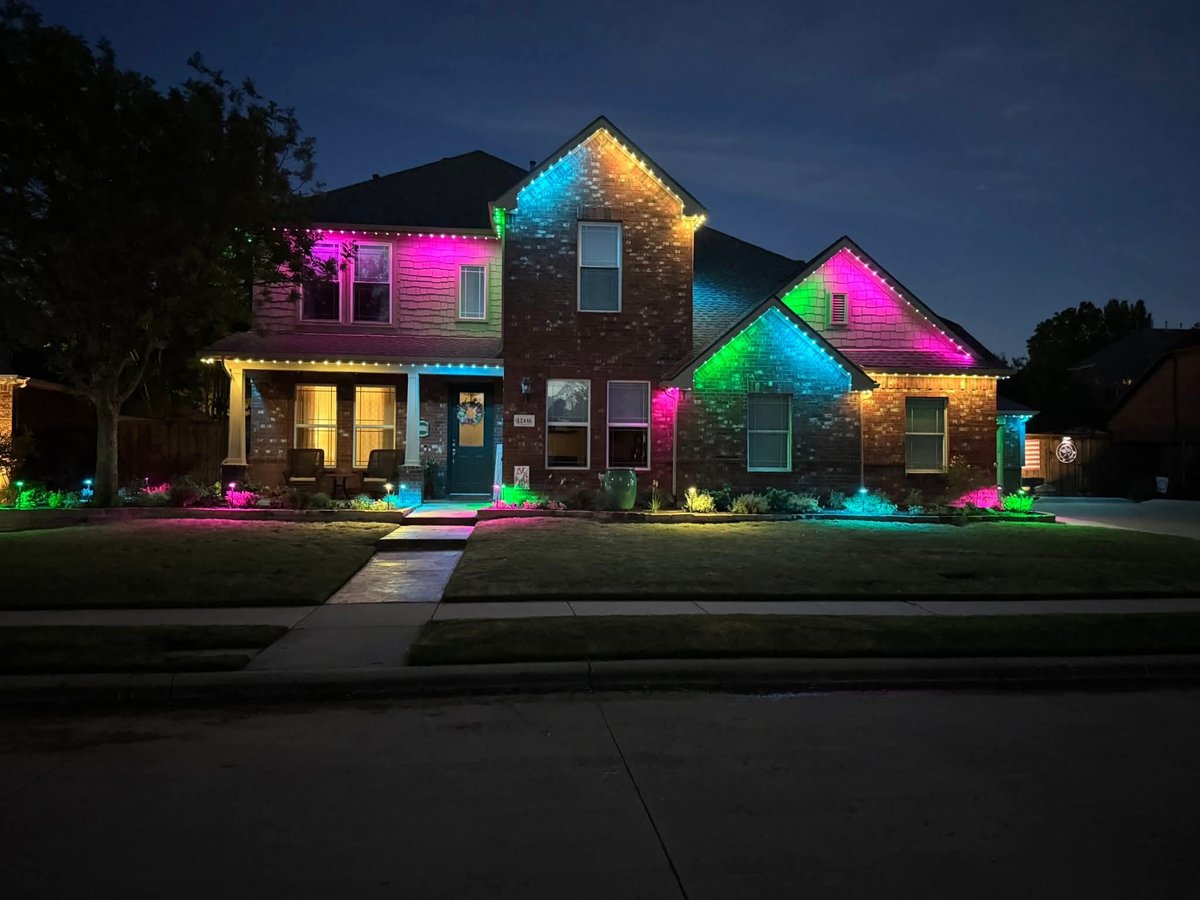
But the system runs 365 nights. Warm white on ordinary evenings makes the house look like it has architectural lighting. Then it becomes something else entirely for every other occasion:
- Every holiday, not just one — Halloween, July 4th, Valentine's, St. Patrick's, Easter
- Game days — exact team color matching, one tap
- Birthdays, graduations, gender reveals, homecomings
- Vacation mode — a scheduled, occupied-looking house while you're gone
- Everyday warm white — the mode most owners end up using most nights
Divide the price across 365 nights instead of 42 and the number reads very differently. That's not a sales trick; it's just accounting for what you actually use.
The Costs People Forget to Count
When homeowners compare permanent lighting to seasonal, they usually only count the invoice. The seasonal side has costs that don't show up on one:
- Booking pressure. Good installers in Central Florida fill up by early fall. Wait too long and you're either paying a premium or going without.
- Two appointments, not one. Every seasonal install is also a takedown, usually scheduled in January when you've stopped caring.
- Strand attrition. Florida sun, heat, and summer storms are brutal on stored and installed light strands. Replacement is a recurring line item.
- Storage. Bins in a garage that's already full.
- Risk. Ladder falls are one of the most common holiday injuries in the country. If you're doing your own two-story roofline, that's a real cost with a real probability attached to it.
Who It's Genuinely Worth It For
Strong yes
- You're already paying a company every December
- Two-story home, steep pitch, or a roofline with multiple gables — labor cost compounds fastest here, so permanent pays back fastest
- You're staying put five-plus years
- You like the idea of using it for more than Christmas
- Physical limitations make ladder work a bad idea
Probably not
- You're listing the house within a year or two. You will not recover the cost at resale — we cover why in our post on permanent lighting and home value
- You genuinely don't decorate and never have
- Simple single-story ranch, and an hour on a step ladder doesn't bother you
- You're renting
- The budget is tight enough that this competes with a roof or an AC system — those come first, every time
Straight talk: if you're in the "probably not" column, we'd rather tell you that at the demo than sell you something you'll resent. We're not going anywhere. Buy it the year it makes sense.
The Quality Question Inside the Price
"Worth it" also depends on what you're buying, and permanent lighting has a wide quality spread. Cheap systems exist. They tend to share the same problems: adhesive-mount channel that releases in Florida heat, non-replaceable LED nodes so one failure means re-running a whole section, controllers with no local fallback when the app service goes down, and installers with no electrical license.
The things that actually determine whether a system is worth its price:
- Mechanical mounting to fascia or trim — not adhesive
- Individually replaceable LED nodes
- A real product warranty from the manufacturer, plus a separate labor warranty from the installer
- A licensed electrical contractor doing the work
- A local company that will still be around in year seven when you need service
That last one matters more than people expect. A lifetime warranty is only worth the company standing behind it.
Making It Manageable
If the math works but the lump sum doesn't, financing through Wisetack spreads it out — and monthly payments are frequently comparable to what a seasonal install costs annually, except you own the system at the end.
The other lever is timing. Booking in late summer rather than October means better scheduling and no peak-season crunch. If you're thinking about this year, earlier is cheaper in every way that matters.
Frequently Asked Questions
The Bottom Line
Permanent holiday lighting is worth the price when you're staying in the home, you'd otherwise be paying or climbing every December, and you'll use it for more than one holiday. It isn't worth it as a resale play, and it isn't worth it if you don't decorate.
The honest way to find out which one you are: have someone come out, measure your actual roofline, and give you a real number. Ours is free and there's nothing attached to it. Then run the math yourself.